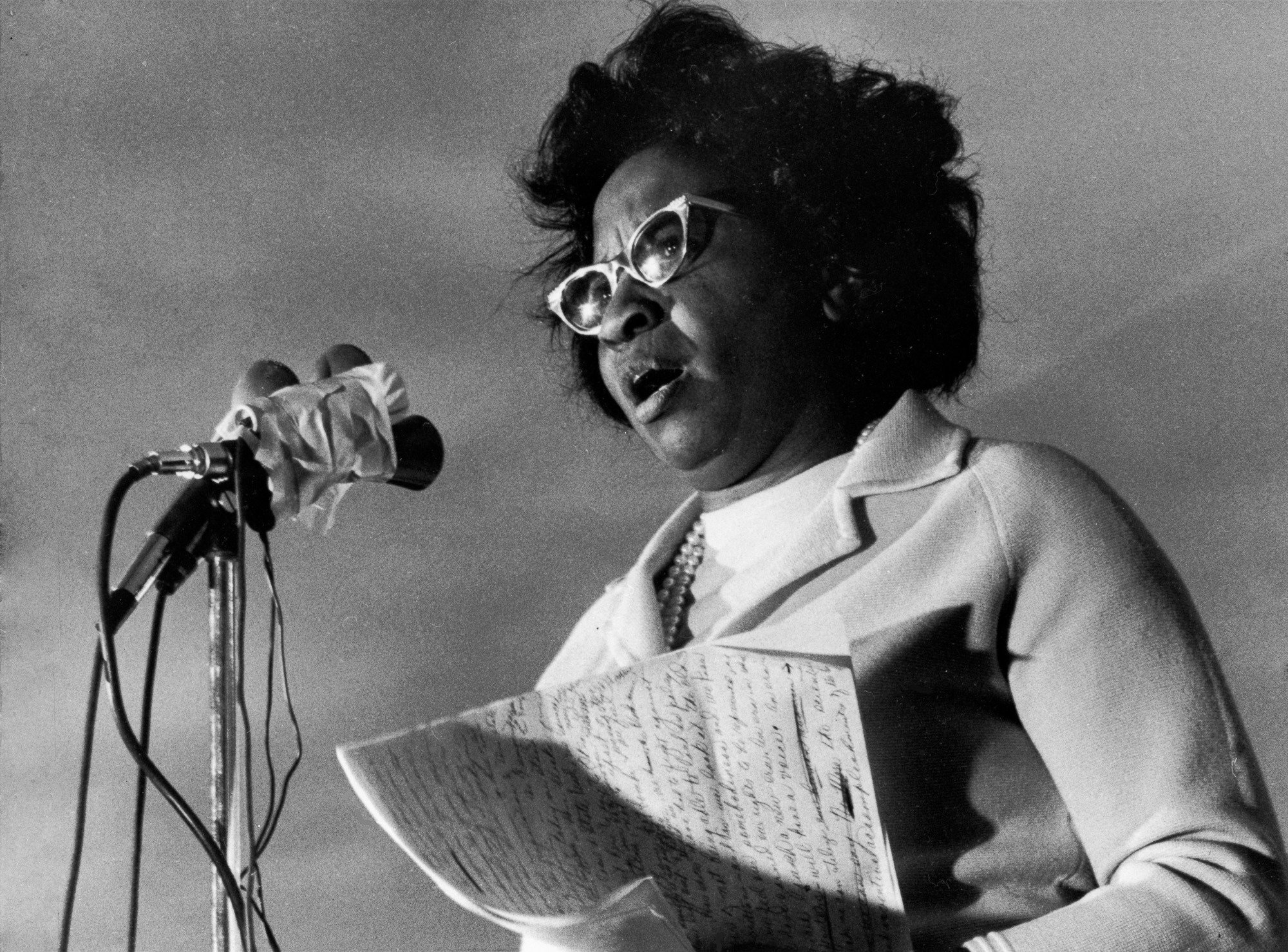
In this Nov. 16, 1971 photo, longtime Oklahoma civil rights leader, Clara Luper announces her candidacy for the U.S. Senate at a rally on Oklahoma City's east side. Luper, who retired from her role as a school teacher in 1991, said in a 2006 interview with The Associated Press that she had dedicated her life to spreading the message of racial and gender equality. (AP Photo/File)
On Aug. 19, 1958, the NAACP Youth Council, led by teacher Clara Luper and her students, launched a sit-in at the Katz Drug Store lunch counter in Oklahoma City.
The store enforced whites-only seating, and the students’ peaceful protest directly challenged that segregation.
Their action quickly drew national attention, becoming one of the first sit-ins to receive widespread coverage.
The impact was immediate — shortly after the protest began, the store owner agreed to integrate the lunch counter.
But the movement didn’t stop there. Luper and her students continued organizing sit-ins across Oklahoma City, playing a pivotal role in integrating restaurants throughout the Midwest and inspiring similar actions nationwide.
Clay Cane is an award-winning journalist, writer, radio host, and political commentator. A graduate of Rutgers University with a degree in African-American Studies, his work on race, culture, and politics have appeared in national publications, including the Washington Post, CNN, and The Grio. Clay is a regular political commentator on MSNBC.