
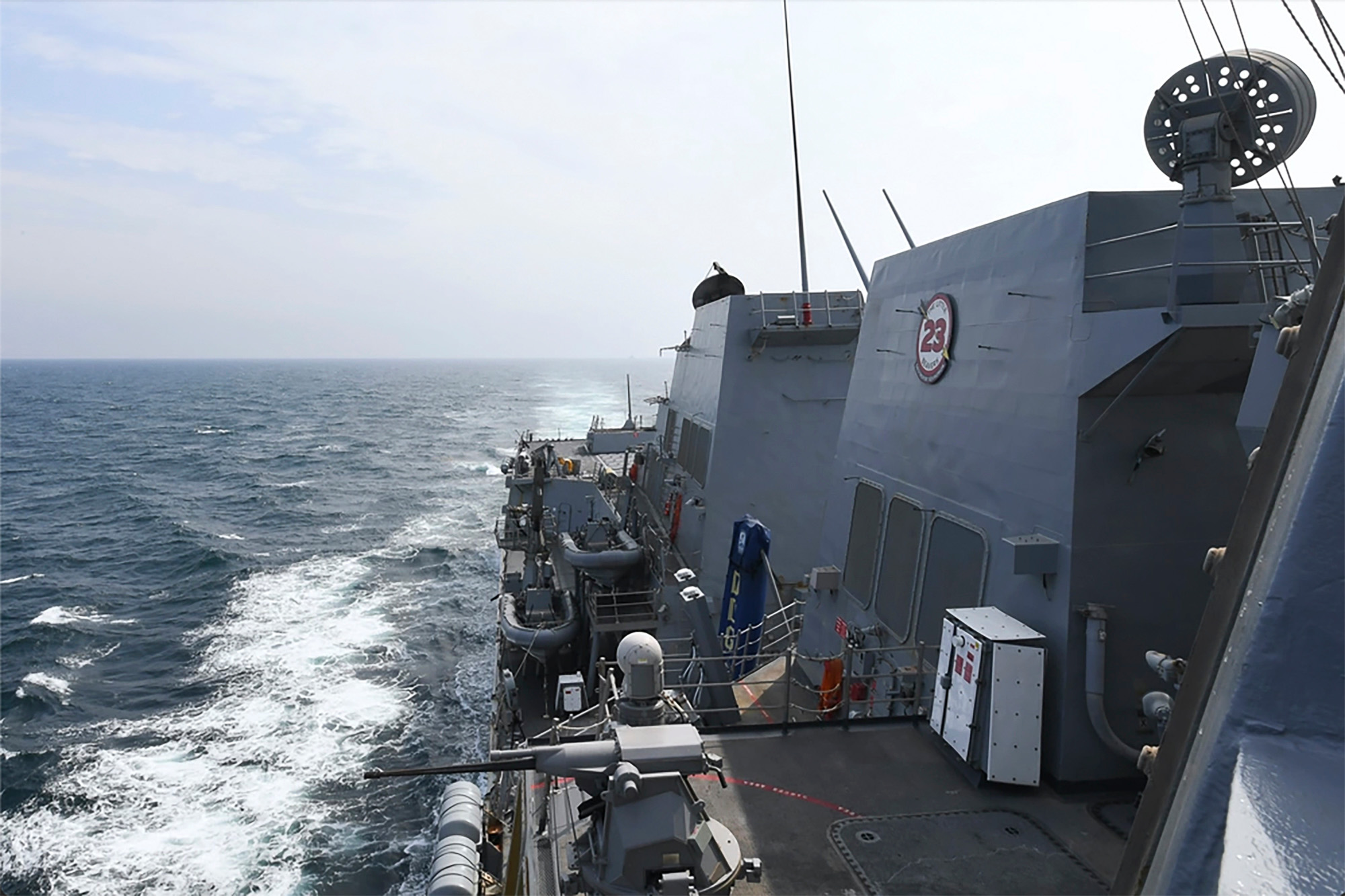
(AURN News) — The clock has officially run out. The U.S. initiated a full-scale naval blockade of all Iranian ports.
This dramatic escalation follows the collapse of ceasefire talks in Islamabad over the weekend.
Sources say negotiations hit a wall when the U.S. delegation, led by Vice President JD Vance, demanded Iran surrender its uranium stockpile — a move Tehran reportedly viewed as a demand for unconditional surrender.
President Donald Trump, speaking at Joint Base Andrews earlier this morning, made the mission clear: No oil leaves Iran until they comply.
While the Strait of Hormuz remains open for neutral traffic, U.S. minesweepers are already active in the water, and oil prices have cleared the $100-a-barrel mark in anticipation of the squeeze.
The response from Tehran has been swift and defiant. Iran’s parliament speaker, Mohammad Bagher Ghalibaf, warned that the country would respond if the U.S. escalates the conflict.
Click play to listen to the report from AURN White House Correspondent Ebony McMorris. For more news, follow @E_N_McMorris & @aurnonline.