
“We wish to plead our own cause. Too long have others spoken for us.”
Samuel Cornish and John Russwurm wrote that in 1827, in the first edition of Freedom’s Journal. Almost 200 years later, it doesn’t read like a quote from history class. It reads like something that’s still due. America spent the Fourth of July doing what it always does: flags, cookouts, a president somewhere saying the word “freedom” a dozen times. Normally I’d have been at the White House covering it, standing in that press pool the way I do most days. This year I was in New Orleans instead, on the Global Black Economic Forum stage at Essence Festival, and honestly, it took me a minute to realize how badly I needed to be there instead of on the lawn.
Charles Blow moderated our panel “Reclaiming the Narrative: The Shifting Media Landscape and What It Means for Your Livelihood” with Ashley Allison (CNN commentator, CEO of Watering Hole Media, owner of The Root), April Ryan (theGrio‘s White House correspondent), Errin Haines (editor-at-large and one of the founding mothers of The 19th), Elizabeth Booker Houston (attorney, public health professional, political commentator), and me, there for American Urban Radio Networks. We were supposed to be talking about AI, shrinking newsrooms, the creator economy, misinformation, all of it. And we did get to those things. But before we could really dig in, I kept circling back to something else, a fact I couldn’t let go of once it crossed my mind. Next year, the Black Press turns 200.
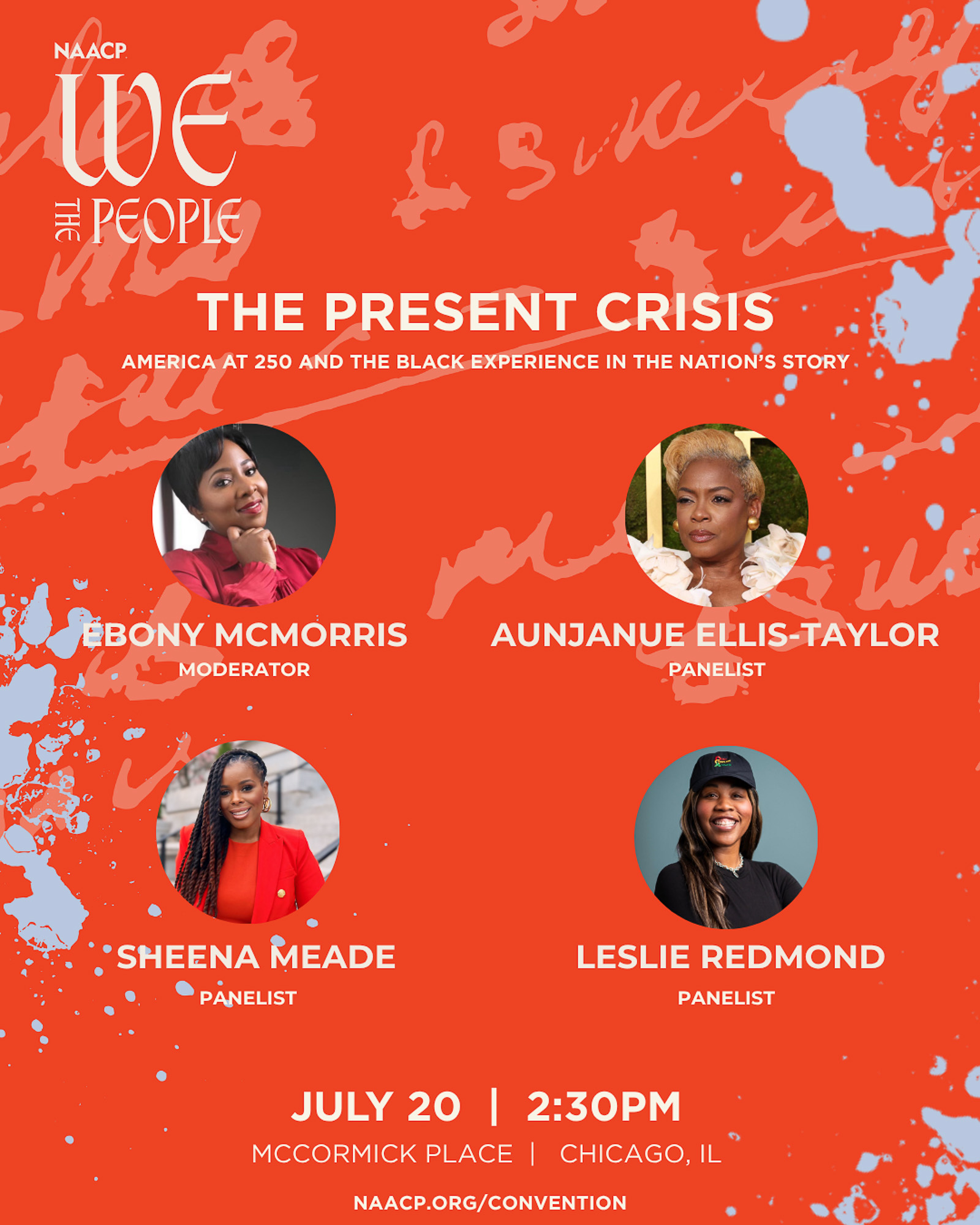
I said that pretty early on, because I don’t think the number sinks in when you just hear it. Before Twitter, before cable news, before anybody was livestreaming anything, Black journalists already understood the assignment: if we don’t write our own story down, somebody else will, and they’ll get it wrong sometimes by accident, mostly on purpose. Two centuries of covering this country through slavery, Reconstruction, Jim Crow, the movement, every election and every backlash after it. Not from the sidelines. From inside the thing itself. Black journalism was never a footnote to the American story. It’s one of the reasons America has ever managed to tell the truth about itself at all.
Somewhere in there, the panel stopped being about media, at least to me. It became a conversation about memory: who gets to hold on to it, who gets to shape it, who cashes in on it, and who just disappears when nobody’s protecting it. None of that is a new question. Cornish and Russwurm answered it in their own way when they launched Freedom’s Journal, the first Black-owned newspaper in the country. They weren’t just reporting news. They were keeping a people from being erased. “We wish to plead our own cause.” Still sounds like a job description to me.
Here’s what four years at the White House has taught me: politics fights over memory long before it ever fights over policy. I watch it happen constantly: arguments about DEI, about which museum exhibits stay up, about what gets taught in a classroom, about whose history counts as American history. Everybody calls these “culture war” stories. They’re not really about culture. They’re about who’s allowed to define what this country is, and whose life gets to count as part of the record.
It didn’t escape me that our panel happened on the same day the country was busy congratulating itself. Reuters and Ipsos just put out polling showing how divided Americans feel right now about what this country even represents anymore, and that split isn’t only political—it’s a fight over whose version of history gets remembered. Two hundred years running, the Black Press has stood right in the middle of that fight. Not rewriting the record. Just refusing to let it disappear.
Ownership came up a lot. Ashley Allison pushed back on the idea that creating content is enough. She wants us thinking about who owns the institutions behind it, because somebody has to pay for the investigation, the fact-checking, the years it takes to hold power accountable. That work doesn’t fund itself. But it was Elizabeth Booker Houston’s line that I haven’t stopped thinking about since. She said Black people haven’t always owned the narrative. We’ve owned the strategy.
I keep coming back to that sentence because it’s just true. When the white papers wouldn’t tell it straight, Cornish and Russwurm built their own paper. When Frederick Douglass needed a platform this country wouldn’t hand him, he built The North Star. Ida B. Wells kept writing about lynching even after a mob burned her press down. Pullman porters smuggled the Chicago Defender into the Jim Crow South in their coat pockets because Black families down there couldn’t get an honest account any other way. When America wanted to look away from what happened to Emmett Till, Jet made sure the whole country had to look at it. We didn’t always have the paper, the printing press, the airtime. We always found a way anyway.
There was something I couldn’t stop noticing about the panel itself, too: Charles Blow sitting in the middle of five Black women who’ve each spent their careers doing this work. Black journalism was never something one person did alone in a room. It gets passed hand to hand. Somebody opens the door, somebody else walks through it, and eventually somebody hands you the mic and you’re the one asking the questions.
Errin Haines made a point that stuck with me: trusted journalism and trusted creators aren’t rivals—they need each other, especially now, when a lie can travel across the internet faster than any fact-checker can catch it. April Ryan talked about how much has changed just in her career: newspapers, then cable, then whatever we’re all doing now on our phones. The platforms keep shifting under our feet. The job underneath them hasn’t moved an inch.
When Charles asked each of us for a closing thought, I gave the room two things. First, the practical one: pay attention to your news diet. Who’s actually informing you? Who’s shaping how you understand your own community? Who’s earned your trust, and are you actually putting your support behind them, or just retweeting them when something goes viral? If Black journalism matters to us, we can’t only show up for it during a tragedy or a trending hashtag. These institutions have spent generations investing in us. We owe them the same. Democracy needs an informed public. Black folks have always needed an informed Black public even more.
The second one came from my faith. Ephesians 6:12: “For we wrestle not against flesh and blood, but against principalities, against powers, against the rulers of the darkness of this world.” I closed with that because after spending the day bouncing between the White House and that stage in New Orleans, it hit me that the real fight was never about one man or one election or one administration. It’s about the systems underneath all of that: what gets taught, what gets funded, what gets archived, what gets pushed to the front of the feed, and what quietly gets buried.
The tools keep changing. The tactics keep changing. The job doesn’t. Tell the truth. Protect the record. Put your money and your time behind the people doing the work of keeping it. Because if Freedom’s Journal taught us anything two hundred years ago, it’s this: our story has never been safe in anybody else’s hands but our own.