
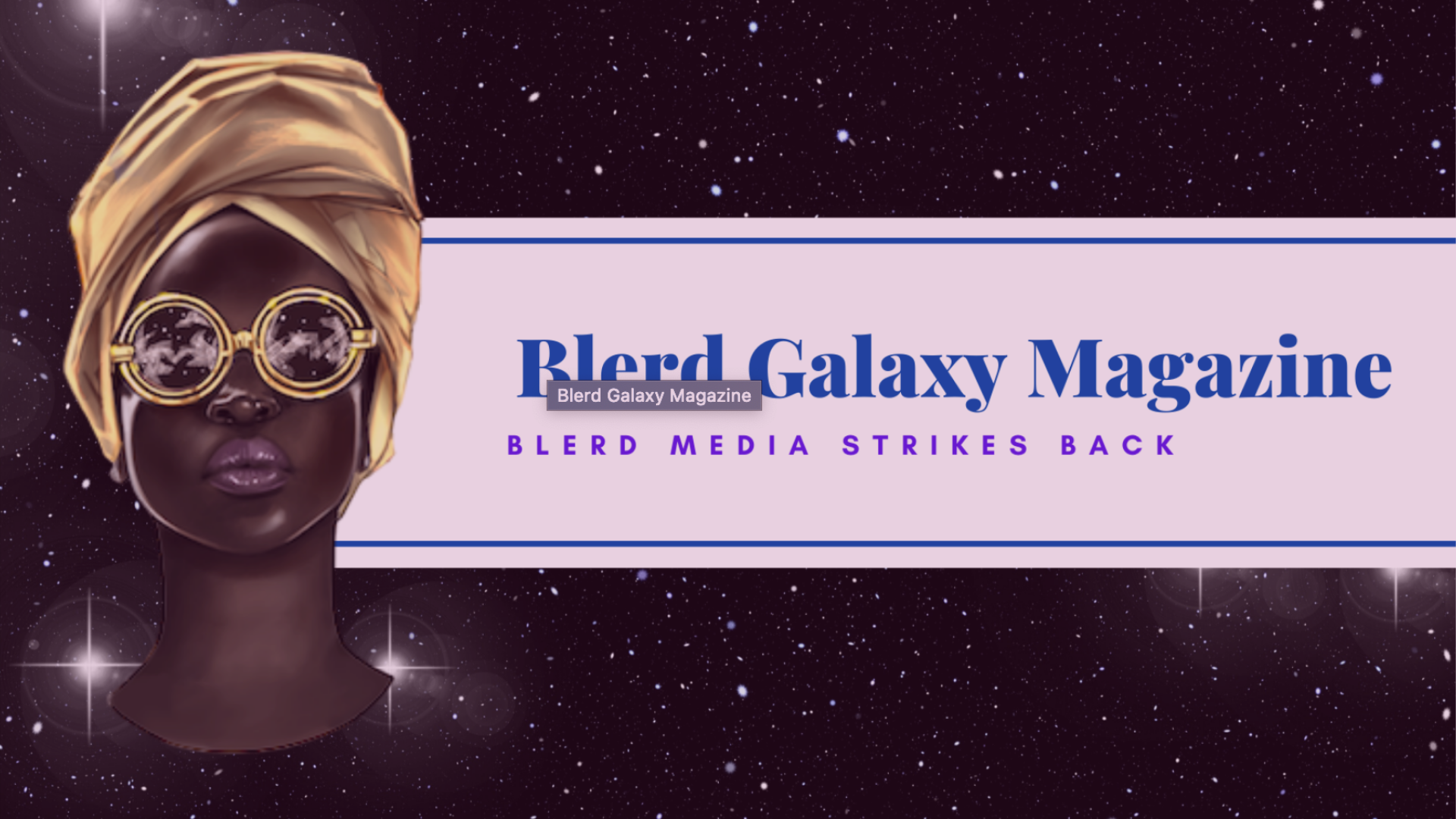
Jonita Davis, Marqueeda LaStar, Vanee Smith-Matsalia and Regine Sawyer are four super blerds on a mission to save the galaxy from myopia. They met in different situations due to their respective work in traditional media, social media, and education, but kept in touch over the past few years. Quarantine brought them closer together, and after several virtual conversations, the fearsome foursome realized that they could use their collective power to create something they desperately wanted to see in the world of fandom media: an inclusive space focused on the blerd consumer that hadn’t sold its soul to big corporations.
That is how Blerd Galaxy was born.
BlerdGlaxay.org is a community dedicated to reporting on nerd media and other societal issues with an intersectional focus on women, the LGBTQ+ community, and BIPOC. It was conceived about three months ago and launched in late July.
“We all really loved the idea,” says Jonita Davis, managing editor of Blerd Galaxy, “of having an outlet that champions Black girl nerds—that would let us be who we are and understood that being a blerd woman is intersectional, so it’s not just pop culture. I’m writing a piece right now about how the media is allowing birthers to come at Kamala Harris, and I’m saying that when you allow that, you’re hurting women who get treated that way in everyday life who don’t have her power. So, we talk about stuff like that too. We’re not just nerds. There are other parts of our lives. We’re mothers, we’re teachers—all this stuff.”
Another component of Blerd Galaxy is that aspiring writers looking to intern will also get a chance to contribute to the site and learn about how to cover pop culture geared toward the blerd consumer. The goal is to give marginalized voices a shot at gaining visibility on all fronts of the business.
“I was writing 12 years before I was able to get into this type of writing,” says Davis, who is also a college professor. “Now, we have an access point where people can get access to the screeners, the celebrities, the interviews—all these experiences you want to have. We can put you up on our site, and by the time you get done you’ll be credentialed by all the cons and festivals and be legit. And you can go to another publication with clips and be hireable. That’s something that hasn’t really been done at all.”
The women of Blerd Galaxy were recently on a panel at Comic-Con where they spoke about race, gender, diversity, finding creativity in dark times, and other issues in comics. They were able to use co-founder Regine Sawyer’s connections as creator of Women in Comics Collective International (WinC) to gain access to a larger platform and shed light on their mission. The panel, titled “Women of Color in Comics: Race, Gender & the Comic book Medium,” was a visual representation of what Blerd Galaxy has in store.
“The atmosphere [at Blerd Galaxy] is something I’ve never experienced before,” says Davis. “I don’t have to code switch in meetings, explain myself, or worry about being heard. We will make the meeting last until everyone is heard and we reach a consensus. Everybody has to be on board [with decision making], and we do everything as a team to keep the publication from going in too many directions. There are a lot of blerd publications where they start off covering the deeper issues on the scene, but then they get popular and start getting more surface and start to fall off. Don’t get me wrong—the money and access [that comes with popularity] can be nice, but at what cost? It’s easy to lose sight because you get all these connections, but that’s why we make sure everybody on this team stays on mission.”
The first paragraph on Blerd Galaxy’s “about” section reinforces their dedication to authenticity:
We at Blerd Galaxy believe that there is room for another voice in this space. We have had enough of seeing media that only focuses on Blerds until they get crossover credits. We, the Blerd and independent creator community want more. We deserve more.
Indeed we do, and it looks like we’re finally going to get it.