
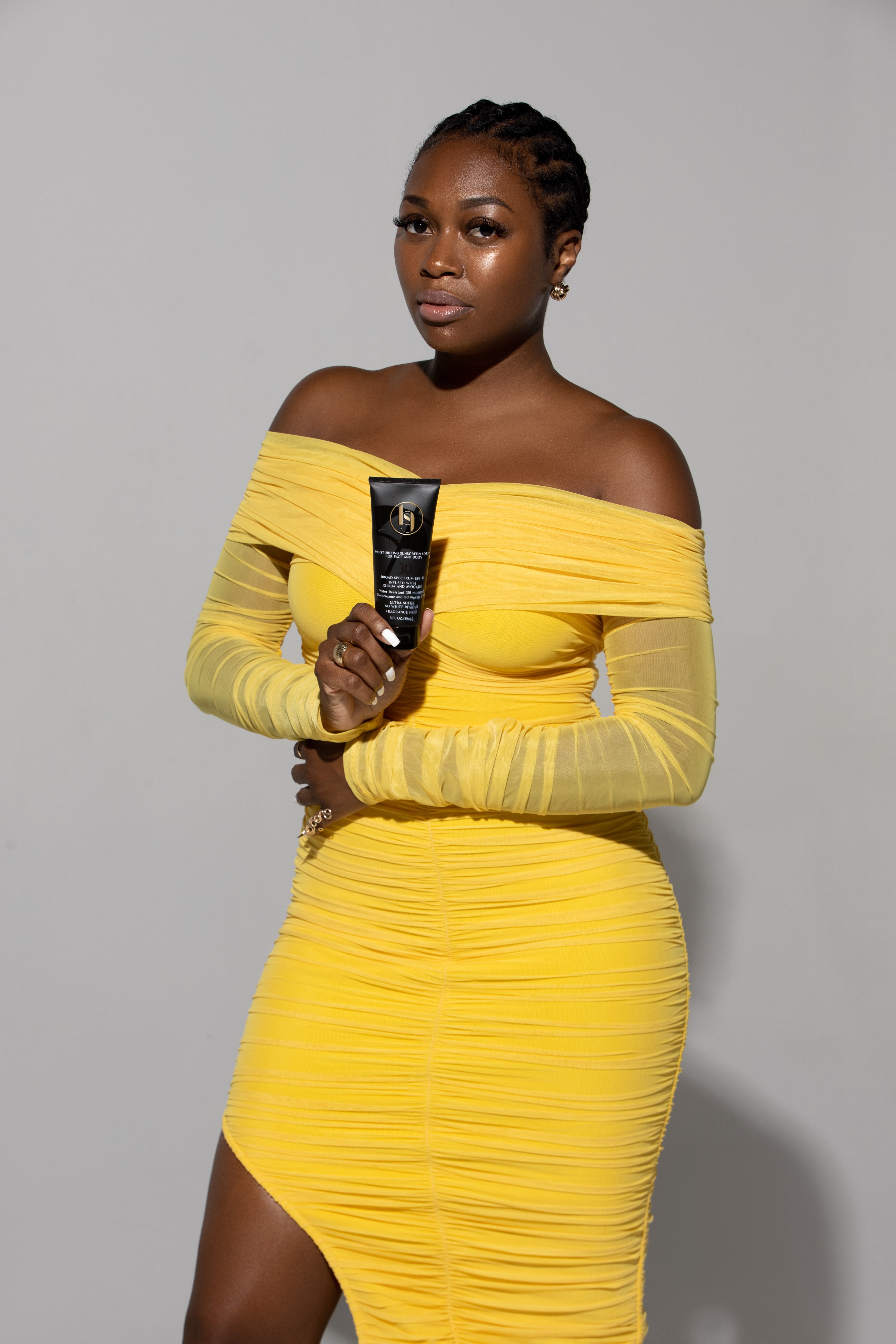
Nothing gets melanin poppin’ like some time in the sunshine, and sunscreen helps keep our melanin poppin’ and protected. But most sunscreens leave a weird white film behind, and the darker you are, the worse it looks. This has been an issue for decades. So, in 2016, Shontay Lundy, a self-proclaimed sun lover, dared to do something about it.
The Los Angeles-based entrepreneur launched Black Girl Sunscreen, the vegan, reef-safe, silicone-free, oxybenzone-free, cruelty-free, paraben-free, and white-residue-free sunscreen that darker-skinned people have been craving for years.

Since then, Lundy’s small business has grown to phenomenal proportions. With over one million units sold, Black Girl Sunscreen has launched in national retail stores including Target and Ulta; they’ve expanded internationally including in Nigeria, the UK, and Canada; and Lundy has secured $1million in funding. Her 16-person operation is small but packs a hefty punch, and her business tactics have proven to be formidable in the face of the pandemic.
Here, Lundy chats with American Urban Radio Networks about how she found a solution to a common problem, how dark skin gets overlooked in the skin care industry, and how her business continues to thrive.
AURN: It’s a big deal that your sunscreen addresses the needs of dark skin. There still aren’t many that do. What steps did you take in figuring out what your formula would be, and why did it take this long for brands to realize that white residue isn’t a good look?
SL: There are a few different reasons why something hadn’t been developed until early spring 2016. People didn’t talk about—or even bring awareness to—the problem, and it’s the lack of education from the professional side. Only about three percent of dermatologists are Black. Dermatologists are the ones who recommend sunscreen to their patients. So that’s one of the reasons why it’s never really been at the forefront for our community. The second reason is the myth that our skin doesn’t get melanoma, but we know that’s not true. However, because we have deeper complexions it’s just harder to see, so without that tangible evidence it’s harder to claim. People weren’t talking about that, so those are a couple of reasons why it didn’t exist.
And we’re also talking about lack of representation in some of those brands. We’re talking about our skin complexion counterparts controlling and running these operations—general market brands—and if there’s no people of color in the room or sitting at the table, then how would they know? So, lack of education, lack of representation, lack of true evidence.
AURN: Another component of your sunscreen development is the ingredients. Now it seems that more brands are enforcing reef-safe and environmentally conscious ingredients, but yours has been that way from the beginning.
SL: Yeah, Black Girl Sunscreen was ahead of our time as far as being formulated without oxybenzone. That’s the ingredient that is harmful to coral reefs. We got some pushback from manufacturers that we were trying to work with—chemists who we tried to work with and partner with—because that was not the way the industry had been formulating. And it was kind of, “You’re green, [just] getting into to this market, what do you know?” But I was really coming from a perspective of wanting to be environmentally conscious and environmentally friendly, and I wanted to know how it could be done. It ended up saving us money because we didn’t have to reformulate later, and we’re also known in the space for understanding where this industry was going and really being ahead of a trend. Now, the trend isn’t going away because it’s a standard. So being ahead of this has set us apart from other brands.
AURN: You’ve done a lot in a relatively short amount of time, from launching in major retailers to raising millions in capital, which tends to be harder for Black-owned businesses. What are some major lessons you’ve learned about getting funding?
SL: Getting funding continues to be an issue but–first of all–people have to know that you’re raising capital, and if you don’t talk about raising capital, then people don’t know. If people can’t find you, if you’re not raising your hand—that’s one of the most important things for your brand. It’s about making noise. How do people find you? It’s not just about Instagram or Facebook. What does your overall brand visibility look like? Are you a face in the community? Are you being seen and heard in whatever space that you’re in? Visibility is a component of building a brand because if you’re not, you’re invisible–then you don’t exist. When it comes to raising capital there were several connections made before we even landed a contributor. But that’s because we kept talking about it, manifesting that this would happen, and being ready when the conversations and the connections were being made. So, what I’ve learned is when you feel good and strong about something, it’s okay to talk about it and to be confident.
AURN: What adjustments did you have to make as a business when the pandemic hit?
SL: The pandemic really hit everyone with essentials like toilet paper, water, toothpaste—things that were going to help you survive, and we had to figure out how to pivot from non-essential to essential. The way we did that was, we understood the landscape and that the new normal was working from home. The new normal was that during your break, while working from home, you might go for a walk outside where you need to put on sunscreen, or if you have a family with children and part of their day is them having recess, then they need to put on sunscreen. But also during the pandemic was Black Lives Matter, and that was impactful for small businesses–especially female-led businesses–because of the support and temporary alliances that came with that. The pandemic either hurt your business or really helped because of the things I mentioned, but for me it helped and it was part of a time when that was absolutely necessary.
AURN: What advice do you have for someone who is interested in becoming an entrepreneur, particularly in the skincare space?
SL: This isn’t specific to the skin care space. I think, in general, you don’t always have to have things figured out because you’re constantly evolving. I say this because people think that Black girls don’t have feelings. But we always have to muster the courage to do things and being afraid is normal. So my advice is to give yourself grace and give yourself positive self-talk, and you don’t always have to figure it out, but without action your ideas are always a dream.