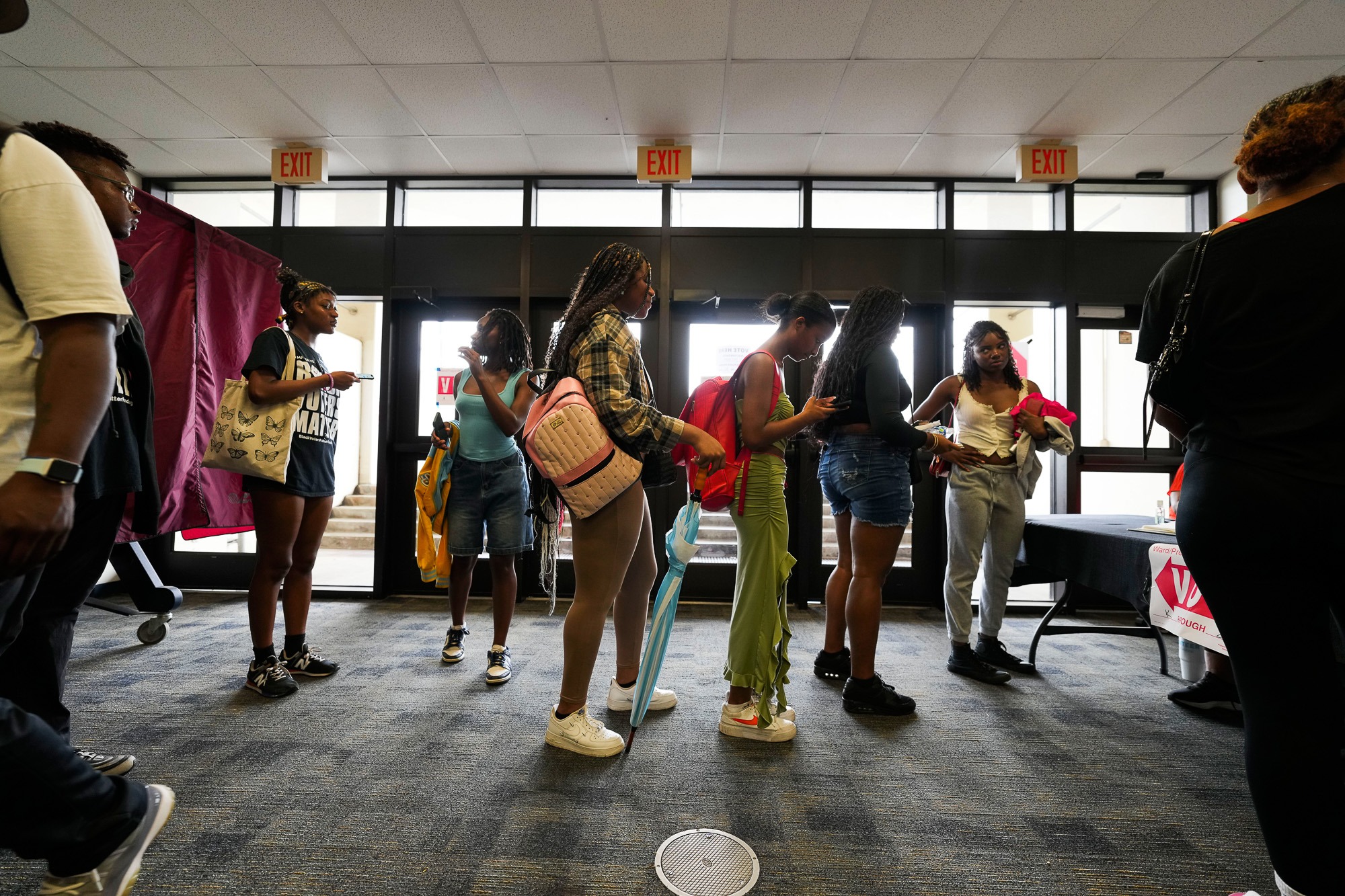
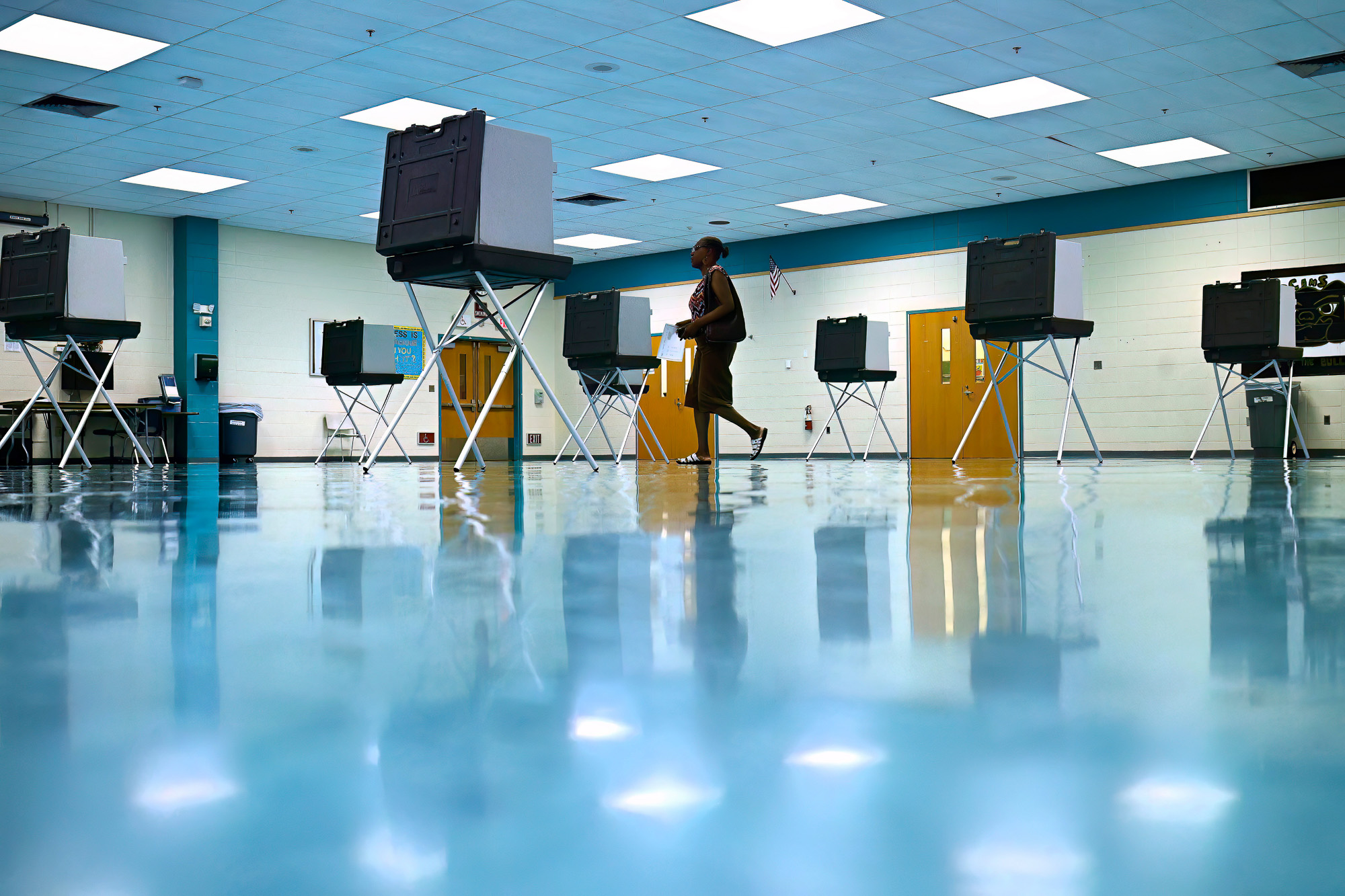
Students line up to vote at a campus polling place at Southern University in Baton Rouge, La., on Election Day, Nov. 5, 2024. (AP Photo/Gerald Herbert, File)
Advertisement
(AURN News) — Today, the U.S. Supreme Court will hear one of the most consequential voting rights cases in modern history, Louisiana v. Callais.
At stake is Section 2 of the Voting Rights Act — the federal law that protects Black voters from discrimination at the ballot box.
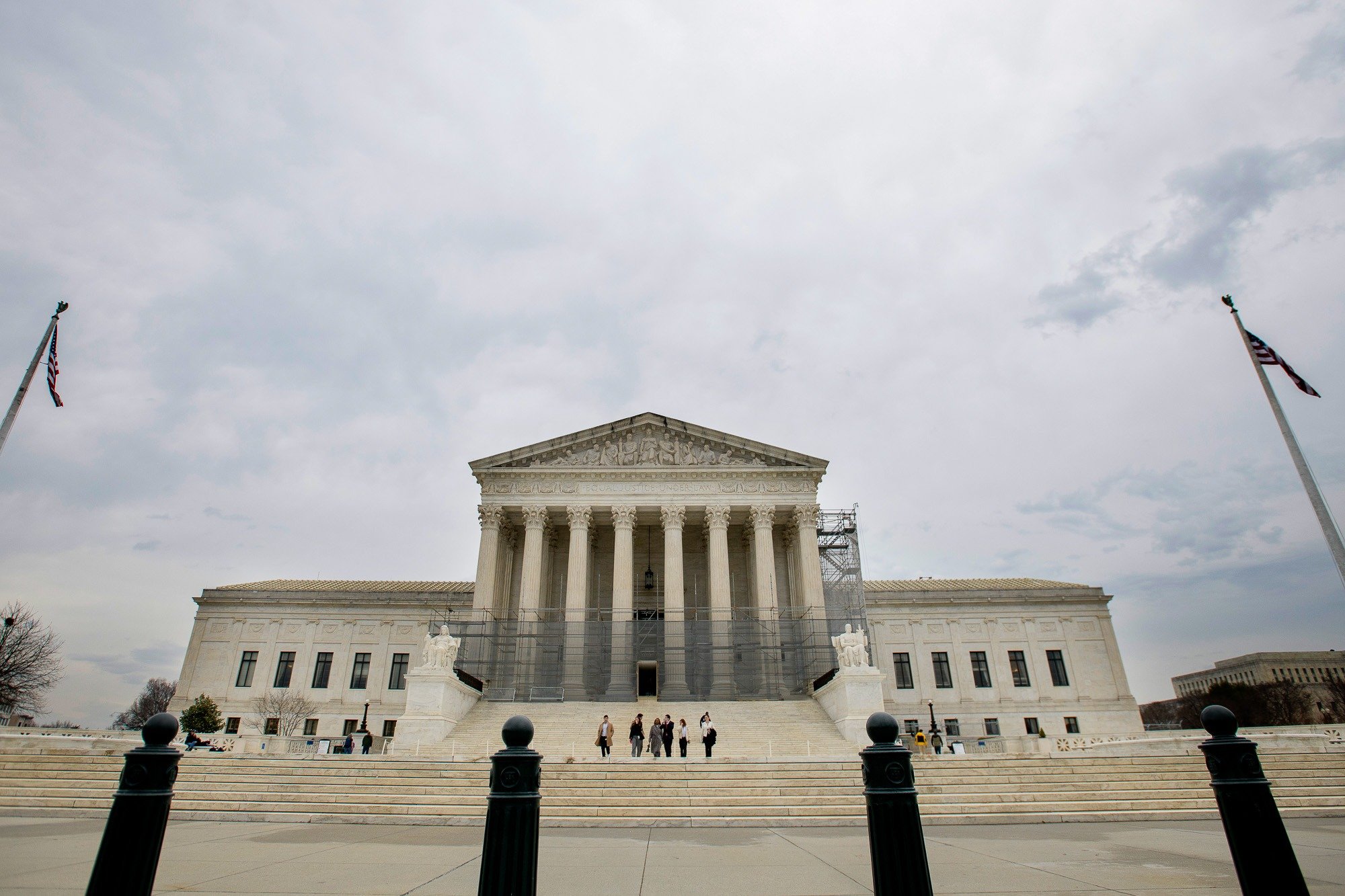
The Supreme Court of the United States is seen on Capitol Hill, Thursday, Feb. 27, 2025, in Washington. (AP Photo/Rod Lamkey, Jr.)
The case began after Louisiana’s Legislature drew only one majority-Black district out of six, even though about a third of the state’s population is Black.
Federal courts ordered lawmakers to create a second district. But now, a group of white voters says that move violates their rights.
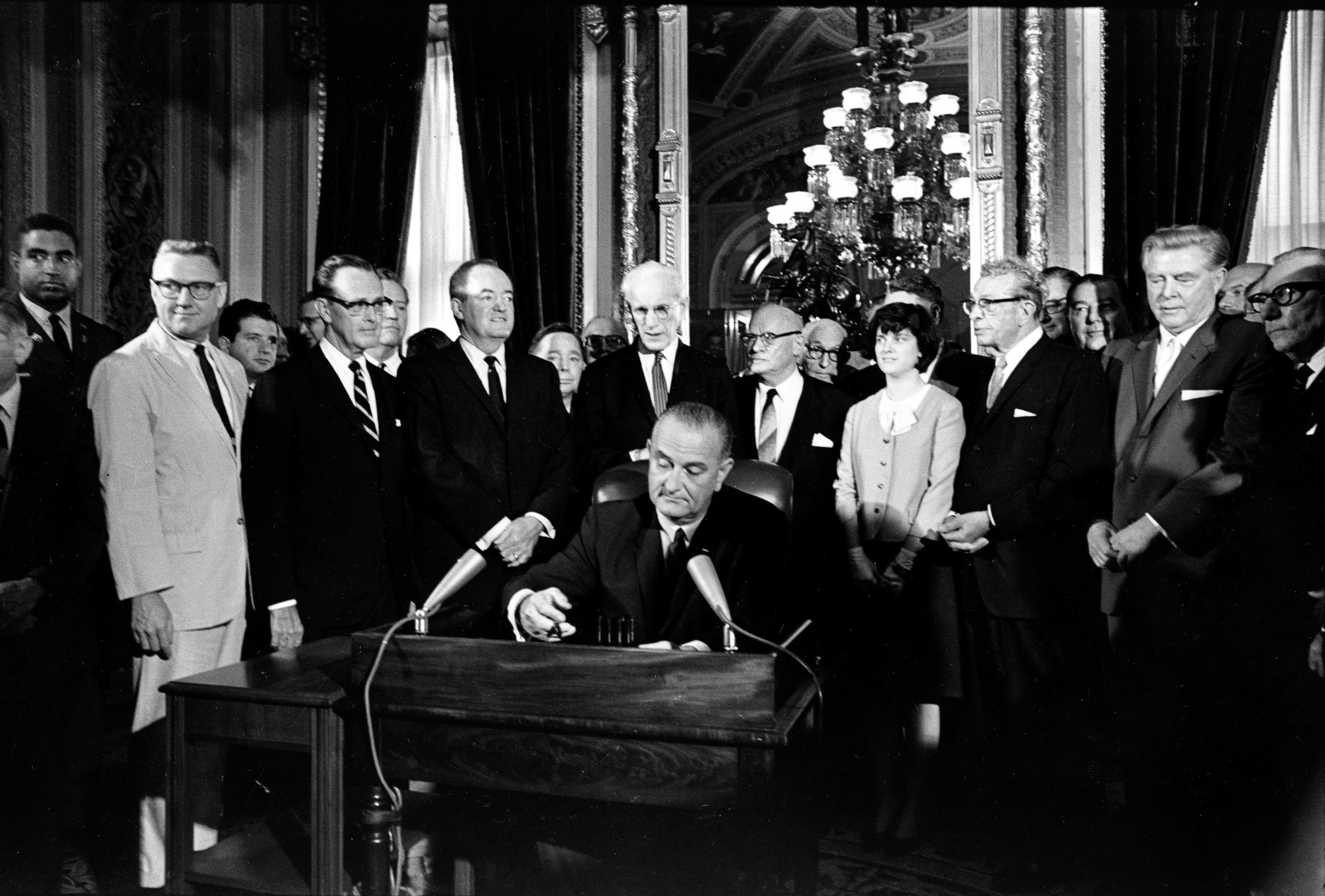
In this Aug. 6, 1965, photo, President Lyndon B. Johnson signs the Voting Rights Act of 1965 on Aug. 6, 1965, in a ceremony in the President’s Room at the U.S. Capitol Washington. Surrounding the president from left directly above his right hand, Vice President Hubert Humphrey; House Speaker John McCormack; Rep. Emanuel Celler, D-N.Y.; first daughter Luci Johnson; and Sen. Everett Dirksen, R-Ill. Behind Humphrey is House Majority Leader Carl Albert of Oklahoma; and behind Celler is Sen. Carl Hayden, D-Ariz. (AP Photo)
If the court sides with them, it could dismantle what’s left of the Voting Rights Act — reducing Black representation in Congress by as much as 30%, according to civil rights groups.
April England-Albright of Black Voters Matter wrote in an op-ed for “Word In Black” that in today’s hearing, SCOTUS “can either defend what’s left of this nation’s only federal voting rights protections, or it can continue its dismantling of democracy, Black autonomy and freedom.”
White House Correspondent Ebony McMorris is a native Washingtonian and University of South Carolina alumna. Her passion is mentoring young adults by teaching community empowerment and media education. She is an NAB member and board member of the Thurgood Marshall Center and was presented the President’s Lifetime Achievement Award for contributing more than 4,000 hours of community service under the Obama Administration.