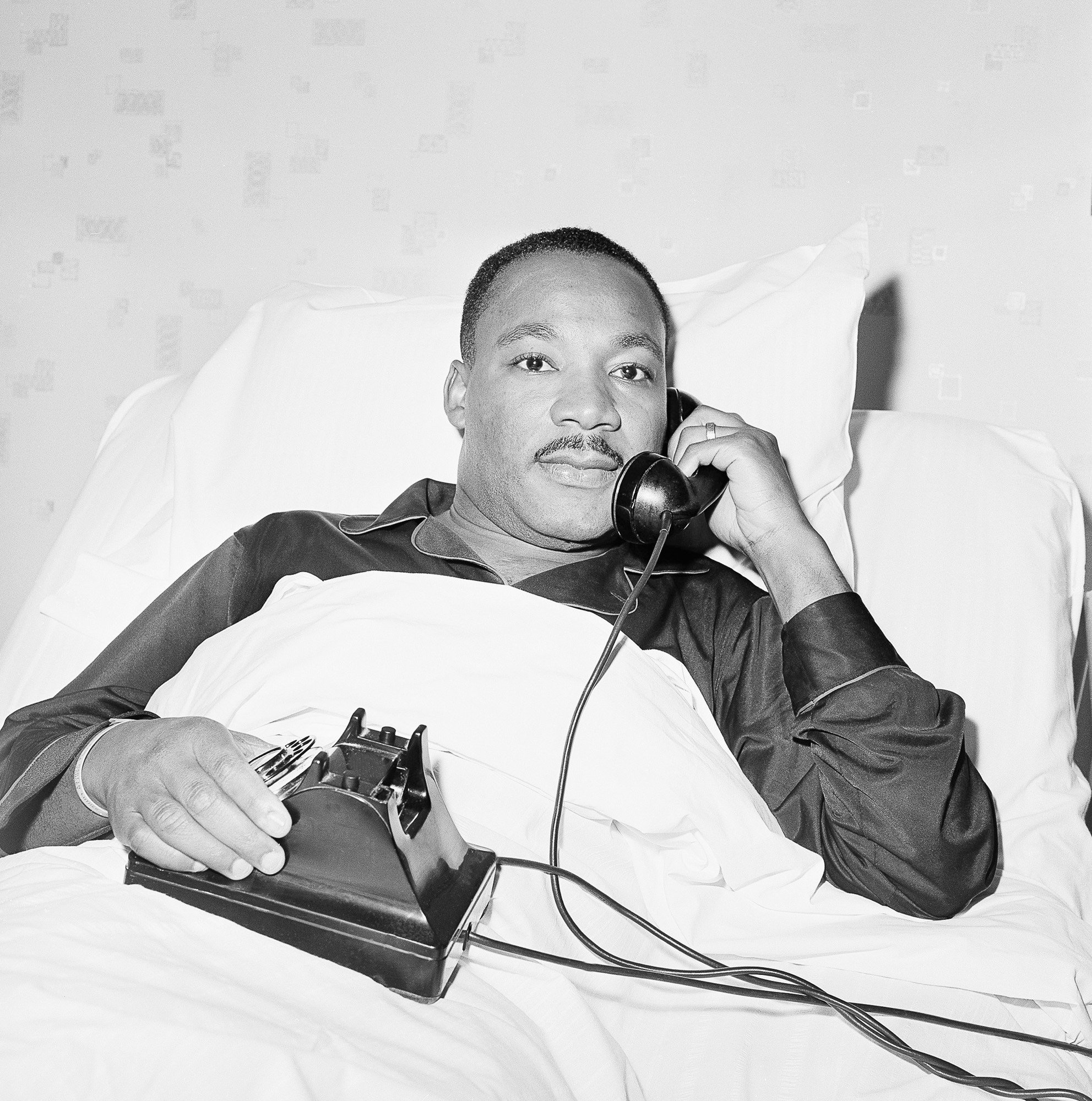
Integration leader Dr. Martin Luther King Jr. receives word by phone that he has been awarded the Nobel Peace Prize as he lies in hospital bed in Atrlanta, Ga., October 14, 1964, where he went for a checkup. (AP Photo)
On Oct. 14, 1964, Martin Luther King Jr. became the youngest recipient of the Nobel Peace Prize at age 35, recognized for his leadership in the civil rights movement. King’s philosophy of nonviolent resistance guided his efforts to fight for racial equality through peaceful protests, even in the face of violent opposition.
Upon receiving the award, King pledged to donate the $54,123 prize money to support the ongoing fight for civil rights. He remained a prominent advocate for justice until his assassination on April 4, 1968, in Memphis, Tennessee.
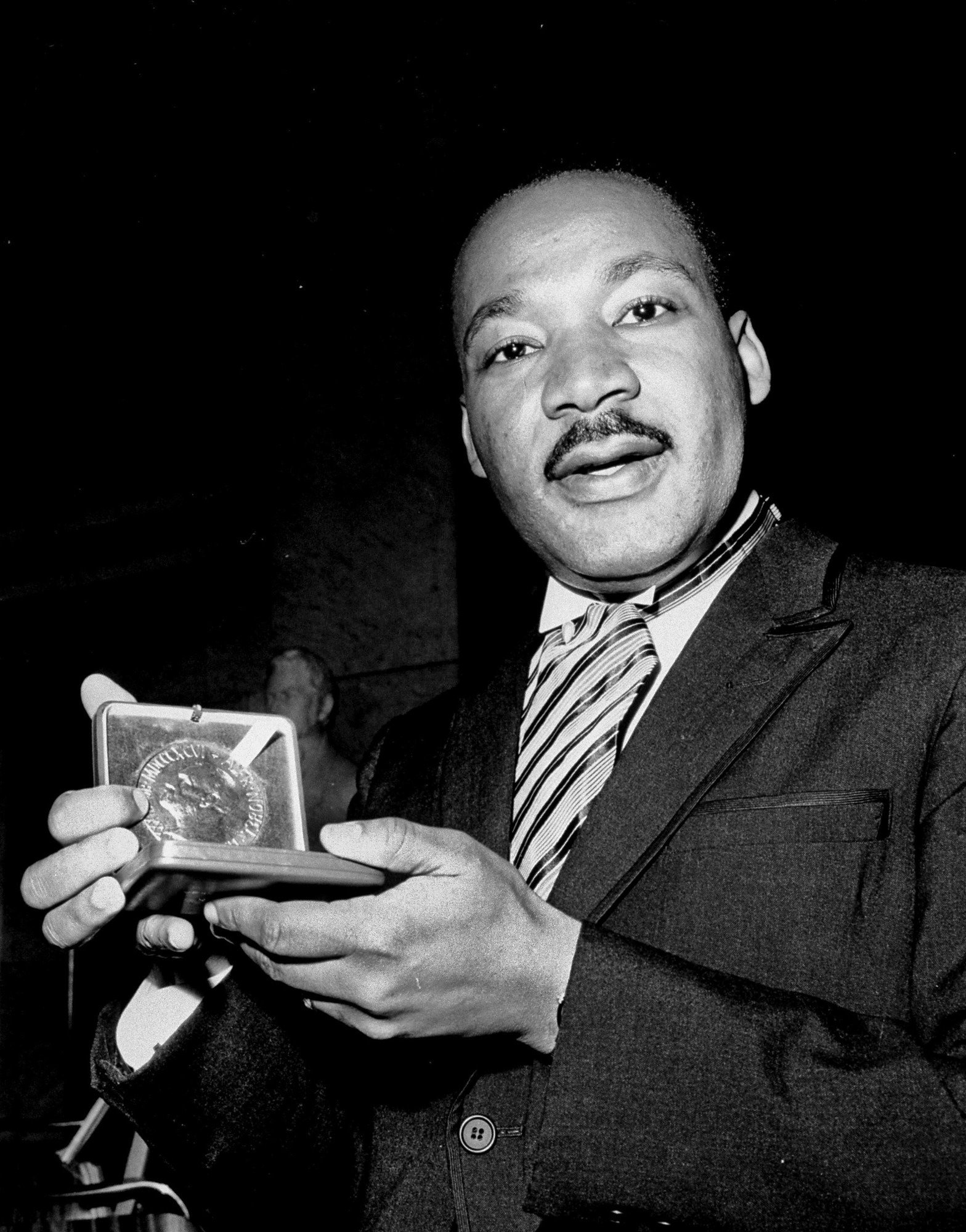
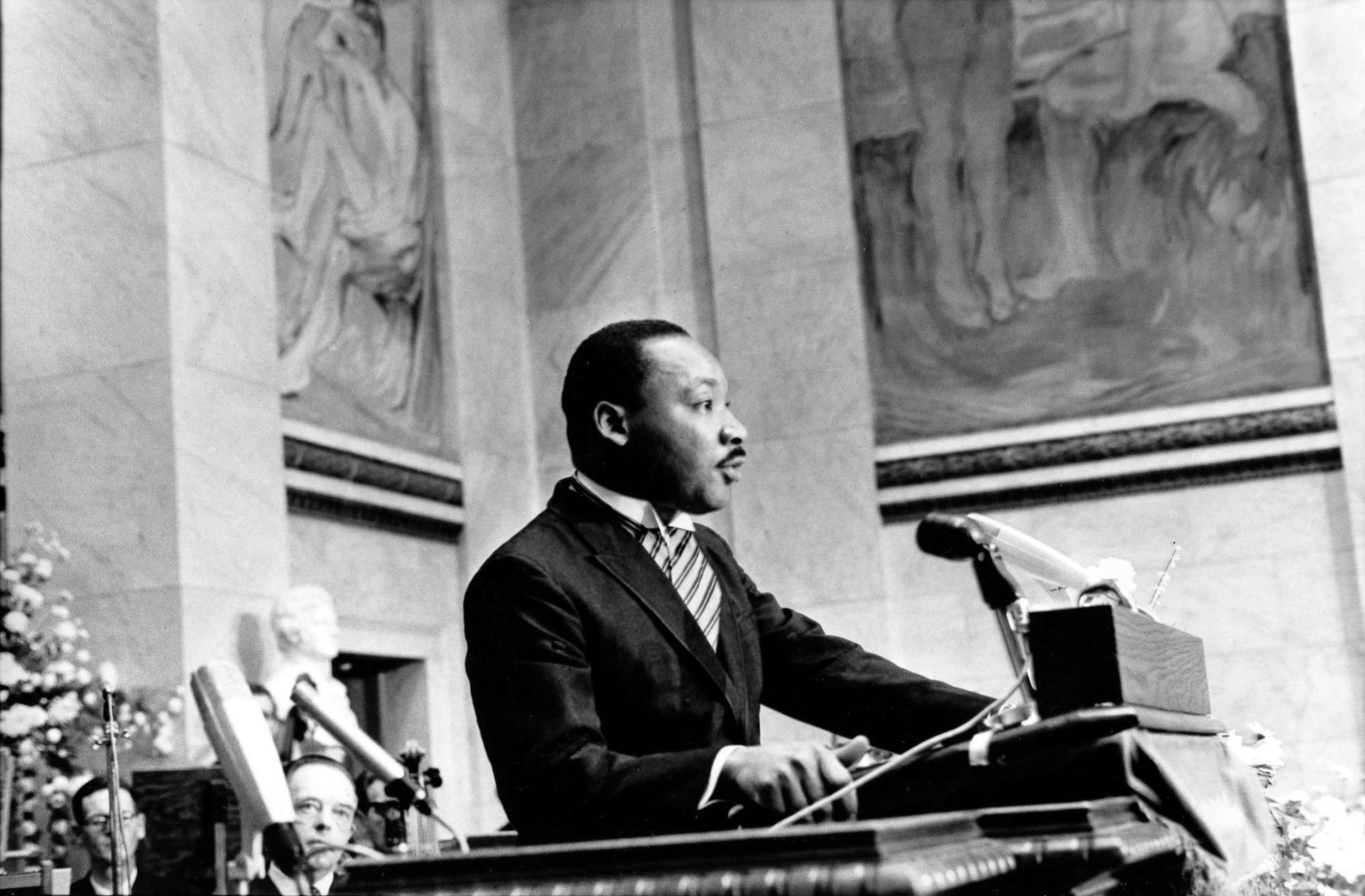
In this Dec. 10, 1964, file photo, U.S. civil rights leader Dr. Martin Luther King, Jr. holds his 1964 Nobel Peace Prize medal in Oslo, Norway. King was honored for promoting the principle of non-violence in the civil rights movement. (AP Photo, File)The Rev. Martin Luther King Jr., delivers his Nobel Peace Prize acceptance speech in the auditorium of Oslo University in Norway on Dec. 10, 1964. King, the youngest person to receive the Nobel Peace prize, is recognized for his leadership in the American civil rights movement and for advocating non violence. (AP Photo)
King’s legacy of nonviolent activism continues to inspire movements for equality around the world.
Clay Cane is an award-winning journalist, writer, radio host, and political commentator. A graduate of Rutgers University with a degree in African-American Studies, his work on race, culture, and politics have appeared in national publications, including the Washington Post, CNN, and The Grio. Clay is a regular political commentator on MSNBC.