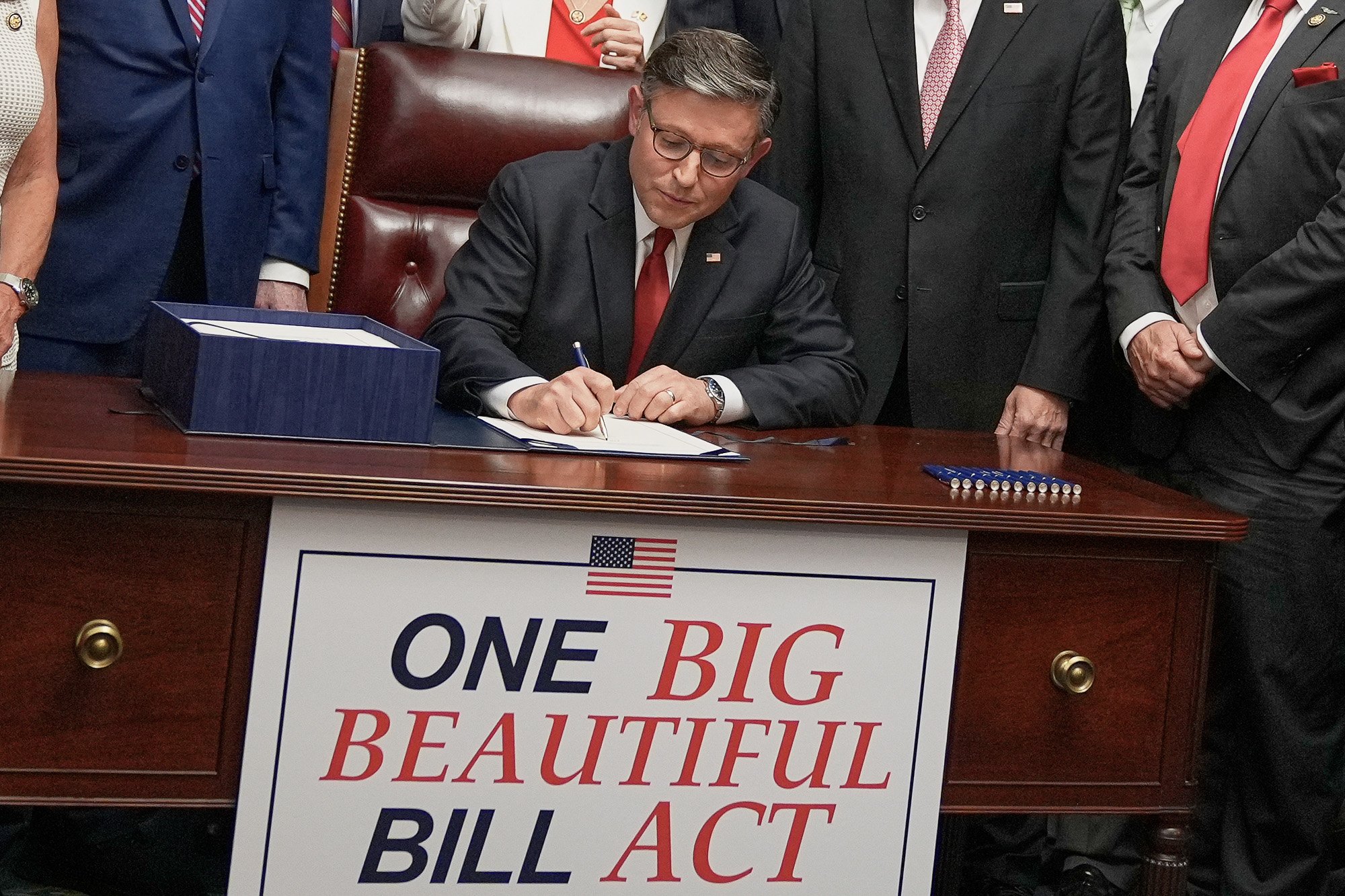
(AURN News) — A new report is raising concerns about how the Trump administration’s sweeping H.R. 1 law, known as the “One Big Beautiful Bill Act,” could disproportionately affect Black households.
The Joint Center for Political and Economic Studies says that while the bill cuts about $4.5 trillion in federal taxes, most of those benefits are flowing to higher-income families and corporations, not everyday workers.
At the same time, the law trims roughly $1.4 trillion from programs like Medicaid, SNAP and student aid programs that many Black families depend on.
There is also a gap in the tax relief itself. The child tax credit was increased slightly, but nearly half of Black families — about 47% — still will not see the full benefit because of how it is structured.
With less federal support, states are expected to raise revenue through sales taxes, fees and fines — costs that tend to hit lower-income communities the hardest.
The report’s takeaway is clear: Instead of closing the wealth gap, the policy could widen it, leaving Black households paying more while getting less.