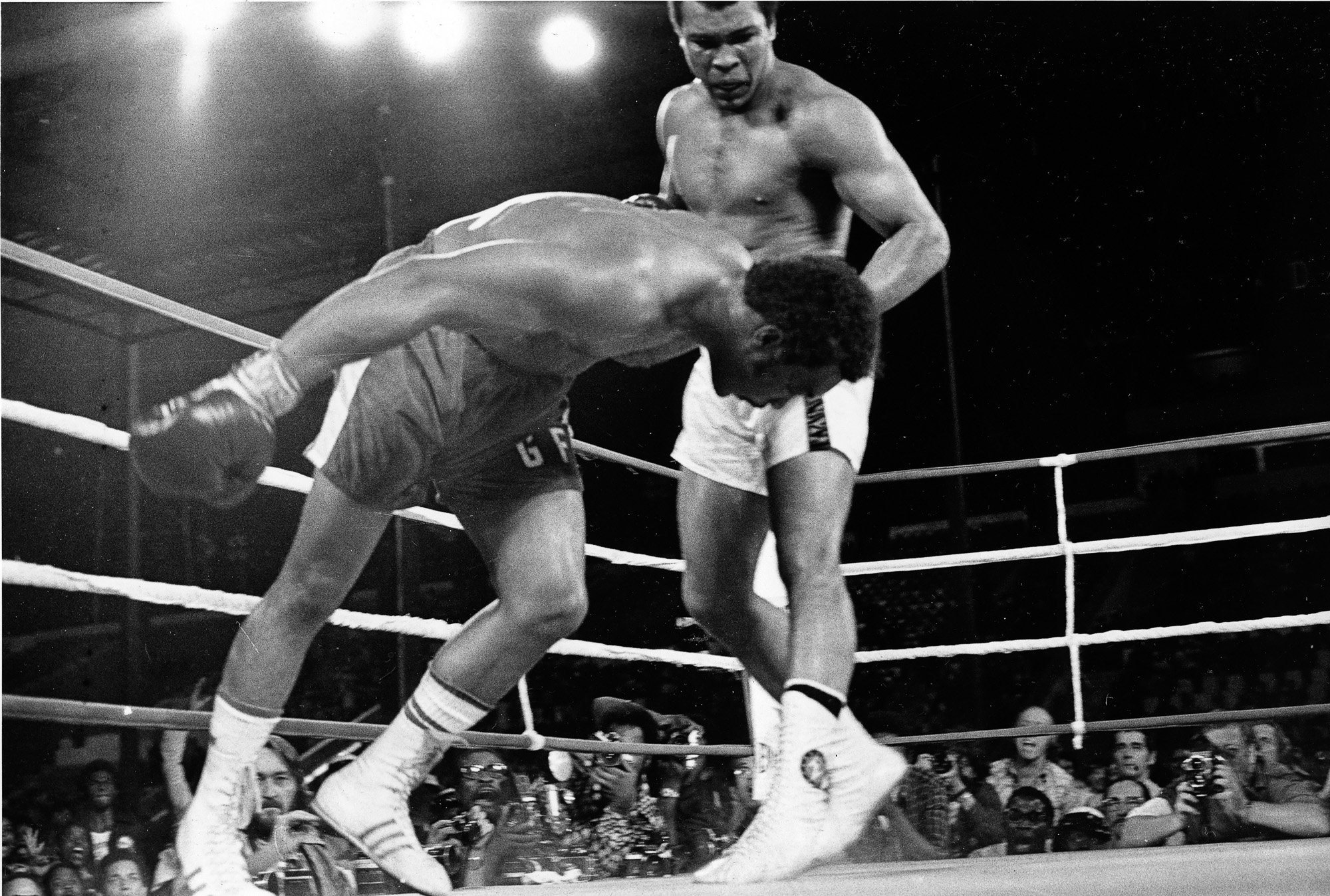
Joe Louis, left, with his opponent Max Baer shown on Sept.24, 1935 at Yankee Stadium in New York. Baer had his first knockdown defeat of his career in this bout. Louis was named the winner in the fourth round. (AP Photo)
On Sept. 24, 1935, boxer Joe Louis made history as the first African-American to draw a $1 million purse in the field of boxing. Born in 1914, Louis achieved this milestone in a fight against former heavyweight champion Max Baer at Yankee Stadium. Despite Baer’s tough reputation — having been knocked down only once before by Frankie Campbell — Louis dominated the bout, knocking Baer out in the fourth round.
The tale of the tape, filled in here on picture of Max Baer, left, and Joe Louis at weighing in ceremonies at state athletic commission office. The figures show the advantages held by Baer over Brown Bomber, which experts say will be offset by Louis’ boxing skill. And note Baer has even Louis smiling. (AP Photo)Heavyweight boxer Joe Louis lines up a shot on the pool table at his training quarters in Pompton Lakes, N.J., Sept. 20, 1935 as he predicts how many rounds he will go with Max Baer next Tuesday. (AP Photo)Former heavyweight boxing champ Max Baer gets his face wiped by his manager Ancil Hoffman in Speculator, N.Y., Aug. 14, 1935. He is training for his bout with Joe Louis. (AP Photo)Joe Louis, left, with his opponent Max Baer shown on Sept.24, 1935 at Yankee Stadium in New York. Baer had his first knockdown defeat of his career in this bout. Louis was named the winner in the fourth round. (AP Photo)Max Baer hit the canvas for the first in his life in the third round of the fight last and these six shots shows exactly how Joe Louis did it the first time, Sept. 25, 1935 in New York. (AP Photo)
Beyond boxing, Louis became a cultural icon, symbolizing anti-Nazi sentiment before and during World War II. He also helped integrate professional golf, breaking the PGA’s color barrier in 1952.
Louis died in 1981, and President Ronald Reagan arranged his burial with full military honors at Arlington National Cemetery.
Clay Cane is an award-winning journalist, writer, radio host, and political commentator. A graduate of Rutgers University with a degree in African-American Studies, his work on race, culture, and politics have appeared in national publications, including the Washington Post, CNN, and The Grio. Clay is a regular political commentator on MSNBC.